
Why is it necessary to apply Cognitive Behaviour Therapy to weight loss and lifestyle changes?
If you are struggling to lose weight and keep it off you may experience thoughts and emotions that lead to unhelpful and sabotaging beliefs and thoughts, which in turn lead to unhealthy eating patterns. You may also have low self-esteem and negative opinion about your ability for successful weight loss and the maintenance of weight loss.
Negative thought patterns, often lead to giving up on your new healthy diet and lifestyle. Unsuccessful weight loss and maintenance are related to a number of underlying psychological issues and clinical psychological interventions and psychotherapies are key components to help you stay motivated and achieve lasting weight loss.
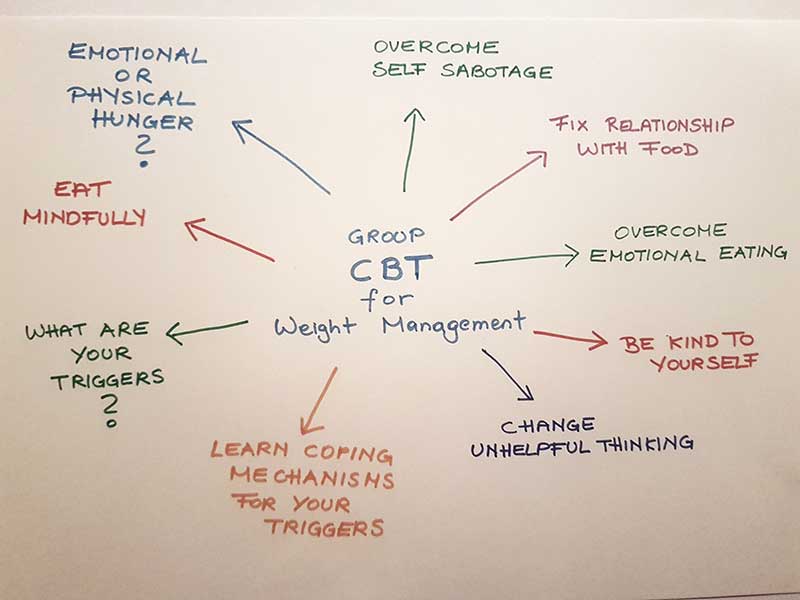
In order to address those unhelpful, sabotaging thoughts, behaviours, feelings and erroneous beliefs, CBT can be applied to help you gain control over unhelpful stimuli and triggers and promote alternative behaviours during critical emotional situations.
The behavioural aspect of CBT helps you with changing your behaviours/habits around food choices, social situations, and planning. However, applying behaviour changes only is rarely successful, which most weight loss programms focus on.
Research tells us that successful weight loss approaches need to be supplemented with cognitive techniques, addressing your thought patterns and restructure your thinking, which will lead in changes of behaviours. Cognitive techniques will help you change your self-defeating thinking styles. It will help you to think more realistically about your ability to achieve your weight loss goals, build your confidence and keep you motivated.
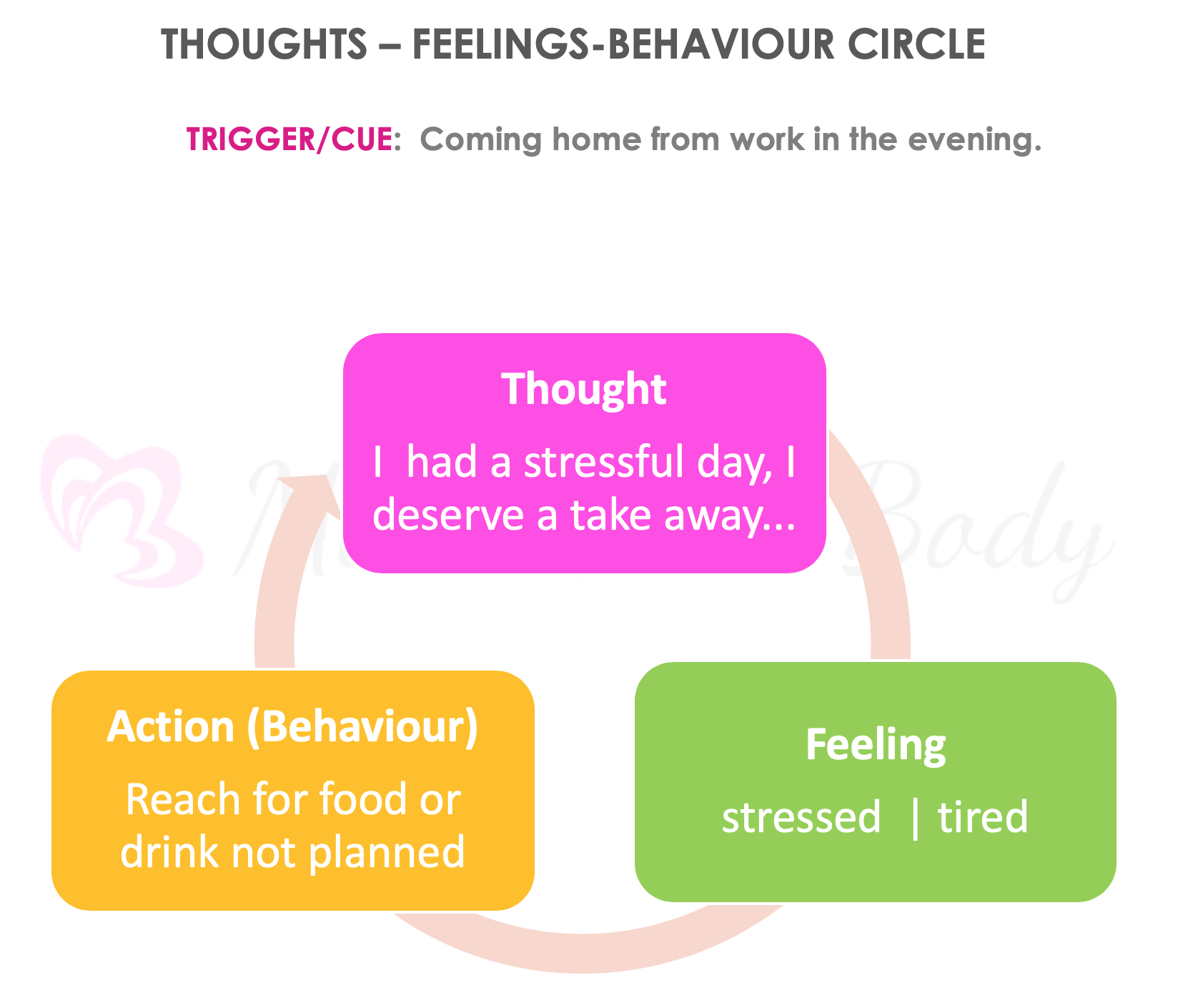
In this lesson you will learn to understand that your Thoughts, Feelings, and Behaviours are all connected and they cannot happen in isolation.
Every thought you have will lead to a behaviour and feeling. A certain feeling will lead to a thought and a behaviour.
- How sabotaging thoughts lead to sabotaging behaviour
- How you can change your behaviour by changing your thought
- A blank worksheet to fill in with your own sabotaging thoughts (TFB Cycle)